Showing posts with label faery shape-shifters. Show all posts

Friday, April 18, 2014

Silkies, Moonlight, & WIllows

Grey Willow
#16 in the April 2014 A to Z Blog Challenge
S: Suil, Willow in the Scottish Gaelic alphabet.


When I think about willows, I immediately picture weeping willows—but they weren’t brought to Scotland from China until the 18th Century, so the tree linked to this letter is the Grey, Crack (so called because of the cracking noise its falling branches make), White, Goat  (because they were an excellent browse for goats) or any number of hybrid varieties of sallow and osier trees. Linked to water and moonlight, symbolic of rebirth and vitality, the allusions to grief and death stem from 19th Century beliefs and the weeping willows. The willows native to Scotland were fairy trees, of course, famed for their usefulness: the saplings are pliable enough for weaving into baskets and other containers; their sap makes a drink good for rheumatism; the twigs as well as the bark yield a lessening of pain (aspirin was first isolated from
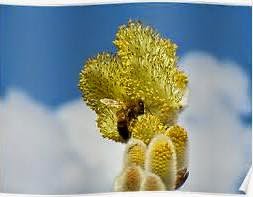
Yellow (Mature) Pussy Willows
 
salicylic acid in them). The wood was used for the Celts’ wagon wheels, as well as for coracle/currach frameworks and today, for cricket bats. And if you’ve ever regarded pussy willows as a harbinger of Spring, they bud out on the Goat variety, turning from silver to gold as they mature, hence the name of “Sunshine fire.”


Silkie-woman Transforming
When I was very small and Granny was teaching me manners, she always reminded me that you never know who you may meet. Since so many of the folk of Faery can be shape-shifters, you’d better be courteous to everyone! As she would say, “If you dae them a favor, they will reward you, but if you mak’ them angry, they will hae their revenge sevenfold!”

I was a very polite little girl….

Silkies are one of the shapeshifting sea-folk; when they’re in the ocean, they look like seals, but when they come out on land, they can take off their pelts and look like beautiful humans as they dance in the moonlight. 

For the last 23 years at the Ligonier Highland Games, I’ve traditionally begun my set of Scottish tales with a new silkie tale, because I love them so much. My granny told me several, and I’ve collected others over the years; I have about 38 in my repertoire. Besides, it’s fun to use my harp seal puppy puppet, Saltie! People always want to pet her afterwards.

It was said that the MacCodrums had webbed fingers and toes because of their silkie blood. Two of the most famous are about the crofter who stole a seal-maid’s skin and made her wed him, and the one about the man who wounded a silkie and was brought to justice for it. One of my favorites is about a young silkie who helps a woman attain the life she wants (“Saltie the Silkie”), but I do not tell “The Silkie’s Revenge” to young audiences, although adults seem to find it a thought-provoking tale. JRR Tolkien wrote of the need we seem to have to communicate with other species, and so there are tales about help given unexpectedly by silkie or human, haunting tales of loss and grief, as well as heart-lifting ones of joy and love. 

I love silkie songs too, from the old ballads like “The Great Selkie of Sule Skerry,” “The Fisherman’s Song for Attracting the Seals,” and “The Seal-Woman’s Croon,” a Hebridean lullaby that’s among my very early memories.  Absolutely, one of my favorite albums is Christina Tourin’s The Harp Seal Lullaby CD, which has several seal songs on it. 


It’s said that if you put a willow twig under your pillow, you may have magical dreams—perhaps of the silkies!