Showing posts with label Druids. Show all posts

Saturday, April 12, 2014

Morag o' the Hundred Heads

#11in the April 2014 A to Z Blog Challenge


M: Muin, Vine in the Scottish Gaelic alphabet.


If you’re thinking, “Oh, grape vines—but do they grow that far north?” the answer is that in this case, vine means bramble = blackberries, and there’s a wealth of folklore about them! “The fairy fruit” was a hedgerow plant that didn’t stay there, but would invade gardens and just about any kind of soil, with up to 9-foot-long creeping vines.
Watch out for Thorns!
Quite a few people have nastier terms for them, because the barbed thorns are on all parts of the plant, and quite vicious.


The fruit was used for jellies, crumbles and pies; Struan Michael is a special berry cake made on Michaelmas Day (Sept. 29th, or under the old Julian calendar, Oct. 10th), and legend says not to eat any blackberries after that; when St. Michael cast Lucifer out of Heaven, he landed in a bramble patch and cursed it. Some version say he spits on it annually, some say he urinates on it. Certainly, after the frosts that occur about then, the berries do become bitter-tasting.


St. Michael & Lucifer

I’m not sure if there are hedges on the Isle of Barra, or if my great-great-granny Catriona learned about brambles after she left the isle on her journey through the Highland down to Glasgow and the ship to America, but I’ve been thinking  lately about the Barra tale she told to my granny, who told it to me about Morag o’ the Hundred Heads.

That’s a nickname or “by-name,” and this is how a bonny young lass acquired it:


18th Century Lady
A chief of the MacNeills of Barra named Roderick—it’s unclear whether it was Roderick Dhu (the dark one) or Roderick the Dove (for his gentle manner), and very doubtful it was Colonel Roderick (the uncaring), but one of them fell in love with Morag at a time when Clan MacNeill was nowhere near as powerful as the Campbell earl whose daughter she was. However, he gave permission for The MacNeill to propose to her. When he did, Morag, who knew very well that her mother was against her wedding this barbarian from a wee rock at the Back of Beyond far from Society (in other words, Edinburgh), said, “If I say yes, will you promise me you’ll mak’ me happy?” And so deeply besotted was he, that he rashly swore upon his honor to do so.

To his surprise, their betrothal lasted for some months, because of all the preparations and purchases that had to be made before the wedding—even involving a trip all the way to London for the bridal gown.!But finally, all was ready and they married. The next day, with a light heart, he handed her into his personal boat, and off they sailed from the mainland through the Inner Hebrides to Barra in the Outer ones, where they were welcomed by the clan ready and willing to love her.


The next day after breakfast, Morag folded her napkin and rose, saying that she was going to the kitchen. Roderick noted how little she had eaten of the porridge and oatcakes, and asked in concern if aught was wrong. No, she said, she simply wanted to give some instructions about luncheon, for there was a dish, her favorite of all things, that she’d had in London, and he had promised to make her happy…. Cheered by the idea that she didn't think herself above taking an interest in household tasks, he kissed her and went about his own work.

Dinner brought a new dish, served on the best new china, but since there didn’t seem to be a great deal of it, Roderick didn’t have any. When Morag ate all of it, he was glad he hadn’t diminished her portion, and thought no more of it.

She had it again the next day, and the next, saying that the cook was improving in preparing it.


Braised Ox-Tongue
The day after that, the cook appeared in Roderick’s study, scowling. “’Tis aboot yir leddy’s wee dish,” he began indignantly.

“Ach, ‘tis little enough to mak’ her happy,” said the laird.

“D’ ye ken whit it is?” No, he hadn’t asked.

“’Tis ox-tongue! And ye canna hae ox-tongue wi’ oot ye kill the kye! MacNeill, you hae a problem!” and the cook stomped back to the kitchen.


It wasn’t just a problem, it was a very serious one. At the rate Morag was going, she was going to completely rid Barra of all its cattle—mostly kept for dairy products, as beloved members of the family, and the hides and meat only used after the animals died—and cause a drastic shortage for all his people, whom he was sworn to care for and lead, and destroy his honor. No one had a large herd; most had at most two or three cows, including himself. However, he had given his sworn word to keep her happy, and the prospect of telling her she could have no more of her favorite food and thereby compromise his honor made him shudder. It was also clear that the added danger of losing the best cook in the Hebrides loomed.

So Roderick went for a long walk to think what to do. He spent the next day writing messages, which he had his men take throughout the isle and to the other nearest Outer Hebridean isles, and he suggested to his wife’s young maid that she take her mistress to her own cottage home, to meet her family and begin to learn about their way of life.

Two days later, when Morag entered the dining-chamber for luncheon, the table wasn’t set; in  fact, it wasn’t there at all, nor were two of   the chairs. The butler explained that her husband had given orders; on such a fair warm day, they would eat al fresco, as fashionable London picnics were called, and he escorted her to a sunny angle of the house’s exterior, sheltered from the wind, where all was waiting. Roderick seated her himself, asking if she was pleased.

“Oh, yes!” said Morag. “Wait until I write tae Mother aboot our civilized amusements here!”


But as they ate, she became aware that her husband seemed to be preoccupied, as if he was waiting for something. And as they ate their blackberry crumble, a procession came along an edge of the lawn—of cattle, single file, led by a succession of men, who all took off their bonnets to them as they led by cows and calves. Dozens. Scores. Hundreds of the beasts.

Roderick was counting under his breath. “Three hundred and sixty-four,” he muttered, frowning.

Then Morag’s maid came hurrying along, leading her family’s cow and the new wee white cow she’d named for Morag.

“Oh, thaur’s the calf I fed yesterdee,” said Morag. “She’s aye bonny, is she no’?”


“I canna think o’ bonny in this Leap Year,” said Roderick sadly. “I swore tae keep you happy, and I will dae sae, at least for the next year. Pity we dinna hae oxen for you, but they’re sae heavy, oor boaties winna bear them. Ye’ll excuse me; I need tae speak tae the herds.” Rising, he bowed and strode off.

Morag wasn’t stupid, just heedless and spoiled. For the first time, she realized what her whim demanded of the society in which she now lived. She knew from her visits to the crofters how simply they lived, and that most of the luxuries she enjoyed had come to the island with her, provided as part of her dowry by her adoring parents. Roderick loved her; he wouldn’t reproach or command her, but now she knew what a hardship this was. What would she do?

At supper that night, she said to him, “I’ve been thinking. Ma nurse used tae say that enough is sufficient. If I hae that dish every dee, soon I’ll no’ savor it. I think I’d rather ainly hae it sometimes, when we visit ma family.”

Roderick smiled at her. “That soonds like a wise woman,” he said.

So the kye of Barra were saved along with his honor, Roderick solved his dilemma, Morag grew up a little, everyone on Barra and the other isles enjoyed the tale of how he had borrowed their cattle to teach her, the cattle were more traveled than they had been, and it gave her a by-name that’s still known over three hundred years later!
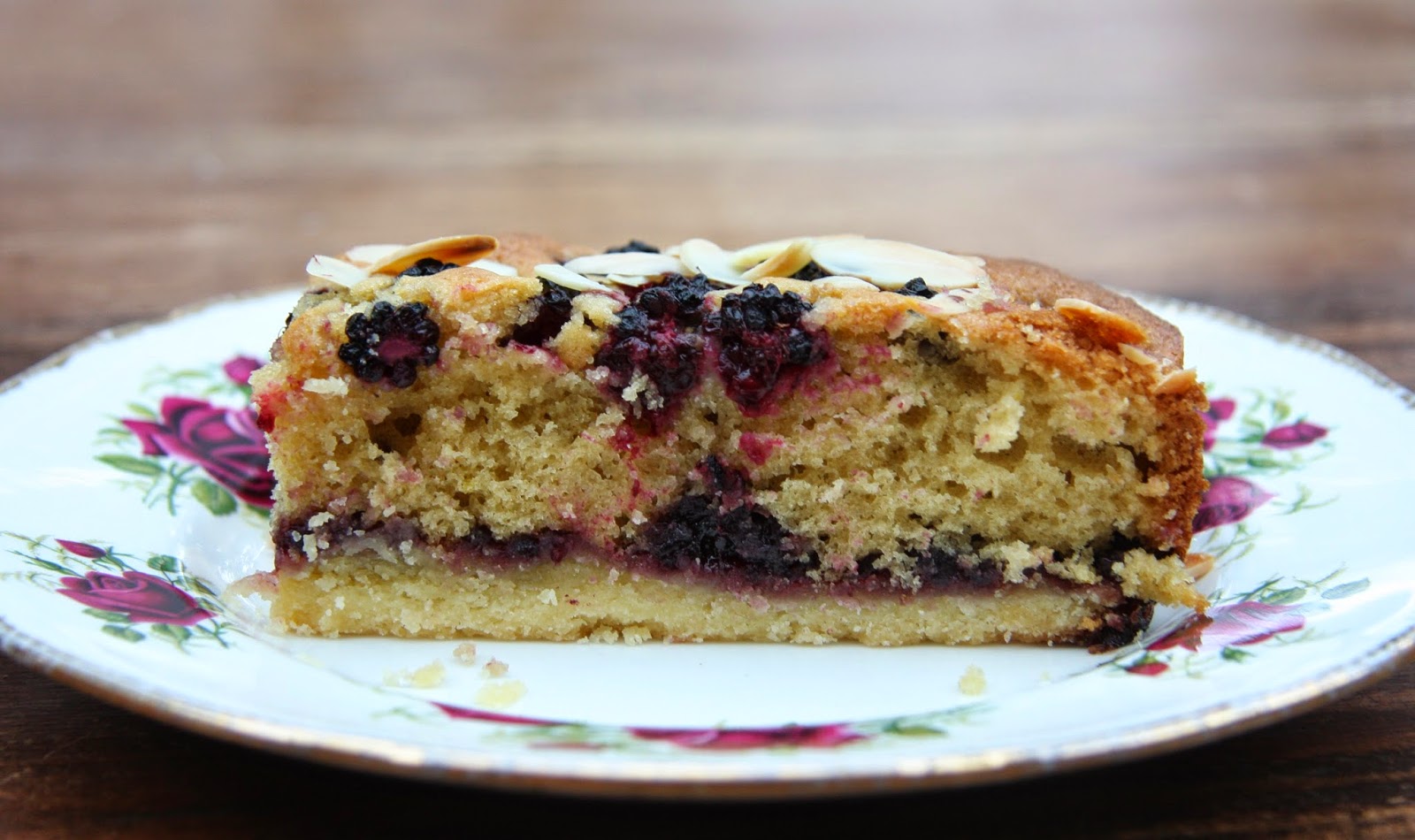

Bramble Cake

Like Roderick's, may your thorny problems be solved by your own creativity!

Friday, April 11, 2014

L Is for Language & Lore

#10 in the April 2014 A to Z Blog Challenge


L: Luis, Rowan in the Scottish Gaelic alphabet. (See below.)

If you’re wondering what happened to the letters J and K, they are not part of the Scottish Gaelic alphabet. 


J is often approximated as an I (ex., Jesus, pronounced “Eesa”) or the sound “sh”, as in Shona, the Anglicisation of Seònaid [pronounced shohn-EHT], the Gaelic name for Janet. Se, followed by a vowel, is a “sh” sound. C is pronounced as a “k” sound, so why use the letter K? Actually, in orthography, the standardized system of writing a language, those two letters are pretty much latecomers.


Most languages were oral before finding a written form to approximate sounds. If one understands the rules of such a system, spelling is often much simpler to master. If you’re skeptical about this in English, well, we’ve adapted a lot of words from other languages which use different rules, hence all the confusion in how to spell or pronounce a word.


Beith, or Birch, 1st Ogham letter
The first writing system used for Gaelic, Irish and Scottish, was in Ogham, the ‘tree-alphabet” devised in possibly the 1st Century, although extant examples date from the 4th. Scholars dispute its origins; ogham refers to the script; the letters are referred to as the Beith-luis-nin, after the first letters, rather as we speak of the ABCs (although nin also means “forked stick,” similar to their shapes, so that may mean “Beith-luis letters.”)


Luis, or Rowan, 2nc Ogham letter
But these were used by the elite, whether scholars or seers. Most knowledge was passed orally from one person to another, the lore (learning) of daily life. This encompassed herb-lore, plant-lore, weather-lore—when you were a farmer or fisherman, that was vitally important—and information pertaining to various crafts.

Here’s some lore about the rowan:


Rowan Pomes
The rowan is very sacred in Scotland. The Druids saw it as a symbol of rebirth, using it on sacred fires and in herbal cures. The pomes (what look like its berries are actually small fruits) are used in wines and jellies; the wood for centuries was used for spindles and spinning-wheels. Planted near doors and houses, that might be one reason why it was called “the wayfarer’s tree,” although birds distributed the seeds, and it grows in high altitudes. It was most powerful when found near stone circles, where the fairies danced. Sometimes a seed will be dropped by a bird in a cranny where some dirt or dead leaves have accumulated in another kind of tree, and it will grow into a “flying rowan.”

Rowan twigs were used to ward off evil, often being placed above doors or carried on one’s person, as recorded in countless Scottish folktales. I vaguely remember Granny saying, “Alas, she realized that the rowan twig had fallen out of her pocket. Hoo she wished she’d mended it!” (This may have been when she was teaching me to mend; I preferred to go out and play.) 

I also recall, the first time I saw a mountain ash tree on a vacation trip in the Rockies, I thought it must be a rowan, and was confused when Mother said no and Dad told me that rowans are members of the rose family. They were right; people have been confusing rowans and mountain ash for years!

Whether or not you have a rowan twig in your pocket, may you become learned in lore!


Fox & Rowan

Thursday, April 10, 2014

I Is Iona, the Holy Isle

#9 in the April 2014 A to Z Blog Challenge

I: Iogh, Yew in the Scottish Gaelic alphabet.
Because I am going to write another post for this challenge using the letter I, I’ll write about yew in that one.


Iona, the Holy Isle, is ancient in so many ways! One of the isles of the Inner Hebrides, off the west coast of Scotland, its stones have been dated to over 1500 million years old. 
Iona Stone
In that long history, it has had many names, including “the isle of the Druids,” and some believe that it was the capitol of that religion, and that it was succeeded by a group of Culdees, the Céli Dé (in Scottish Gaelic, Kelidei, meaning “Companions/ children of God”—although some say that they came much later to the island. Apparently they were a Gnostic group who believed in mediation, helped the poor and sick, and had an interest in liturgical music.

I was told many tales of the Hebrides by my grandmother, Abigail Jones Dangler, which she learned from her grandmother, Catriona MacNeill Ellison of the Isle of Barra, who handed down her devotion to Colmcille (pronounced with “k,” not “s” sounds), otherwise known as St. Columba, Apostle to the Picts and founder and first abbot of Iona’s Celtic Church.

Born a prince in Ireland in 521, raised to be a bard, as a youth he became a monk and later an abbot, founding several abbeys in Ireland before the infamous "first copyright battle." 
Monk Scribe Bas-Relief
He borrowed a book to copy it by hand from St. Finnian, returned the original and became angry when the other abbot demanded the copy as well. Their argument eventually was taken to the highest judge in Ireland to be judged. That worthy Brehon asked Colmcille what the books were made of. Parchment, of course, made from the hides of sheep or cattle. “Then let the calf stay with the cow,” he ruled. Fuming, Colmcille gave up his copy…and because he couldn’t let it go easily, before long both their clans were fighting over it in the terrible battle of Cuil Dremne. It’s said that 5,000 men were killed or maimed in that first copyright quarrel.

Horrified, Colmcille vowed to exile himself from Ireland until he saved that many souls in penance. With twelve monks who insisted on going with him, he set off in a currach to Scotland, wandered around having adventures (including an encounter with Nessie), and ultimately converted the pagan king of Alba, who gave him Iona, a small rocky island. Columba established a monastery there which became one of the most important religious sites in the Western world of the 6th century and for centuries afterwards. It’s said that the Book of Kells was written and illumined there, perhaps some pages by Colmcille himself. He worked as a missionary and diplomat among the clans, established other churches in the Hebrides, turned the monastery at Iona into a school for missionaries, and is said to have written several hymns and transcribed 300 books. That last alone is an amazing achievement! He died in 597, and came to be revered as one of the three great saints of Ireland with Patrick and Bridget.


It’s said that the Book of Kells was begun there, perhaps some pages written and illumined by Colmcille himself. He worked as a missionary and diplomat among the clans, established other churches in the Hebrides, turned the monastery at Iona into a school for missionaries, and is said to have written several hymns and transcribed 300 books. That last alone is an amazing achievement! He died in 597, revered as one of the three great saints of Ireland with Patrick and Bridget.

Iona was so famous that two hundred years later, having produced missionaries who went as far east as Kiev and probably did achieve his goal of converting so many souls, it was a prime target for the Vikings. As a result, his remains were divided between Scotland and Ireland in 849; by then, the monks had left and the buildings were falling into ruin.

Tombs of the Kings on Iona
Yet the fame and sanctity of the island was so great that many Irish, Scottish and even some Viking kings were buried there. It has been said that there was a Culdee community there for a while. (Yes, I know I wrote about them being there earlier, but there’s some controversy about when).

Iona Abby Buildings
Iona is still a place of retreat and meditation; the IonaCommunity holds many events there today, and ferries often combine trips to it with Staffa, famous for Fingal’s Cave and unusual eight-sided basalt stones. 


Capital Letter B, Detail, Book of Kells

Here are the words of one of his prayers; Linda and I do it to a Manx tune, “Colmcille’s Vow”:

God’s peace, and man’s peace
God’s peace and Colmcille’s,
On each window and each door,
On every space admitting moonlight,
On the four corners of the house,
On the place of rest,
And God’s peace on myself
      And God’s peace be on you.


Beehive Monk's Cell, Iona


Wednesday, April 2, 2014

B Is for Beeches & Broonies

#2 on the April 2014 A-to-Z Blog Challenge.


B: Beith, or Beech in the Scottish Gaelic alphabet.

Each letter's linked to a tree or shrub.  

Incredibly useful, beeches were called the “Queen Tree,” consort of King Oak. The wood's good for fencing, furniture, and drums; as yule logs burns with a bright, calm flame. 
Beech-nuts (mast) fattened swine in forests for centuries and  a human food source. Cresoline, the nuts' oil, is used externally on wounds to reduce swelling.The French used leaf-stuffed mattresses, lilts de parlement  (“speaking beds") .  Bark strips were woven into pottles, strawberry baskets.

Folklore: Beeches were “wish-trees,” part of Celtic tree-worship. 


Stack of Beech Slabs
Symbolic of  knowledge and wisdom to Druids; Ogma the Artificer carved the Ogham letters on beech tablets. “Book” comes from boc, beech. Early books were written on slabs of beechwood. Henwen the oracular sow (origin of the pig in Lloyd Alexander’s Prydein Chronicles) grew wise  eating sacred beech-nuts.
Ancient Beech Roots
The surface roots of beeches look serpentine, tying into Celts’ mythic belief that snakes symbolize wisdom and rebirth. 


Avenue of Beeches in Co. Antrim
Do I tell beech stories ? No, but you never know when research'll t come in handy! 

Why do I link beeches with Broonies? And what're broonies, anyway?

Because both begin with the letter b, and because both are useful!


Palmer Cox's English Brownies
The English house-helpers in Palmer Cox’s The Brownies, aren't like the Scottish ones my granny told me about!

No, the broonies are short stocky folk, with large hands and feet, long hair and beards, round rosy faces, brown clothes, the only Faery folk who can stand Cold Iron, and love to help and be useful.


Beardless Broonie
But they're shy; they'll only come out at night when the household are asleep in bed. They may stay for centuries, content with some simple foods left for them each day. If offended by violence or falsehoods, they’ll depart forever. Don't make them  a new suit of clothes in thanks, they'll be  offended, knowing their work's worth better than mortals. 

It’s unwise to arouse their ire; they'll get revenge! 


I prefer to tell about broonies as kind helpers. 
Some tales can be found in Duncan Williamson's wonderful Broonies, Silkies & Fairies collection, or "The Lairdie with the Heart o' Gold," in Sorche nic Leodhas' Heather & Broom.


Wouldn’t it be lovely to have a broonie? Maybe they'd make things from beechwood!